
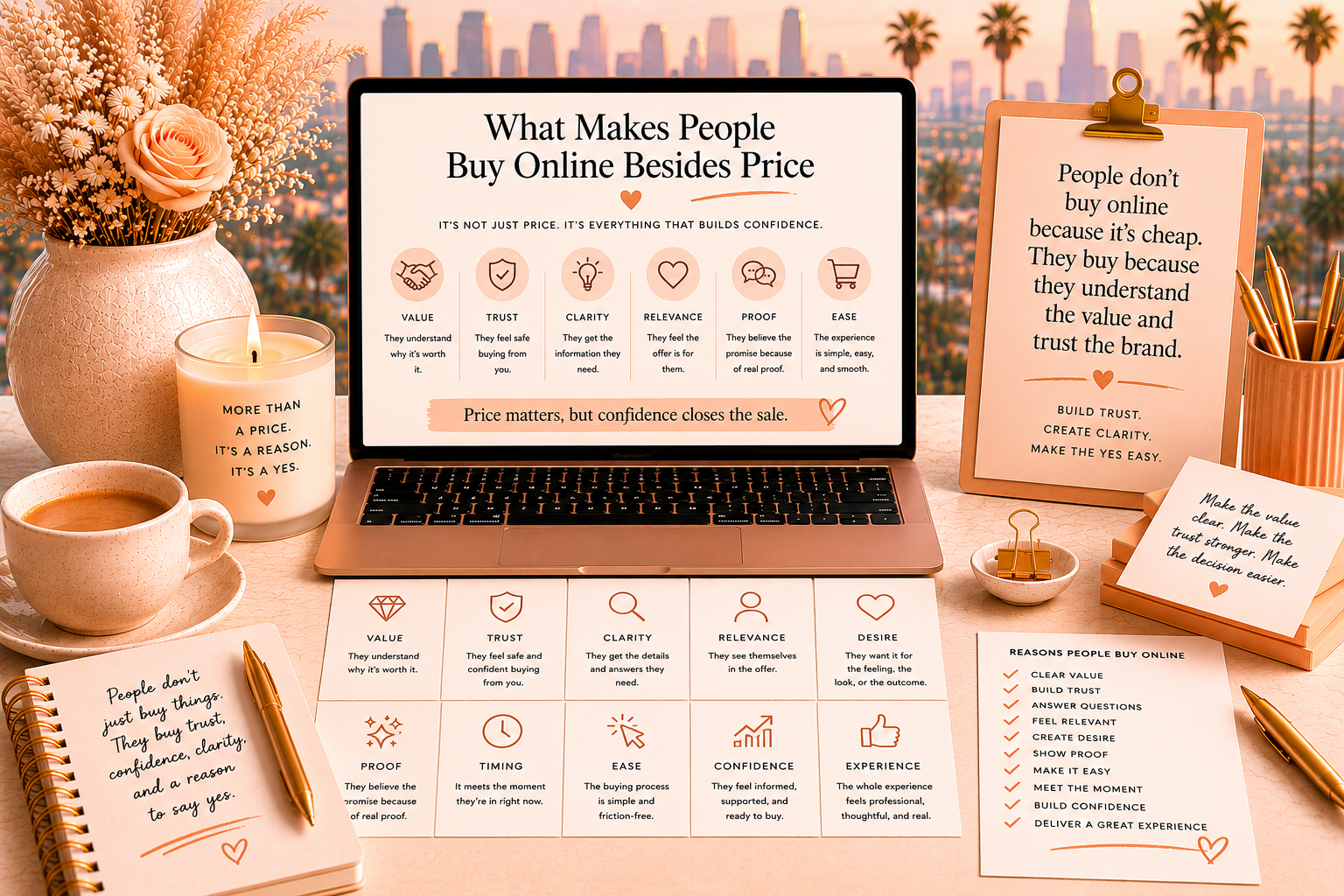
Price matters, but it is not the only reason people buy online. Trust, clarity, timing, value, desire, proof, and ease all shape the customer’s decision.
Price matters.
It would be unrealistic to pretend it does not. Customers have budgets. They compare options. They notice when one product costs more than another. They may hesitate before spending money with a brand they do not know yet.
But price is not the only reason people buy online.
If it were, the cheapest option would always win. And it does not.
People buy from brands that feel trustworthy. They buy products they understand. They buy when the value makes sense. They buy when the timing feels right. They buy when the page answers their questions. They buy when the brand reduces uncertainty. They buy when the offer feels aligned with what they want, not just what they can afford.
For small online brands, this is important because many new sellers assume their biggest problem is price. Sometimes it is. But very often, the real problem is that the customer does not yet understand the value, trust the business, or feel confident enough to make the decision.
A lower price cannot fix every trust gap.
Customers Buy When the Value Feels Clear
Price is what the customer pays. Value is what they believe they are getting in return.
That difference matters.
A product can be affordable and still feel like a waste of money if the customer does not understand why it matters. A product can be more expensive and still feel worth it if the value is clear, specific, and believable.
This is why product descriptions, service pages, photos, reviews, and messaging matter so much. They help the customer understand what makes the offer worth considering.
What problem does it solve? What experience does it create? What makes it better than the cheaper option? What does the customer get that they would miss somewhere else? What care, quality, process, expertise, convenience, or emotional benefit is included?
Customers do not always need the lowest price.
They need a clear reason the price makes sense.
Trust Makes the Purchase Feel Safer
Online shopping requires trust.
The customer cannot always touch the product, meet the seller, test the service, or see the final result before paying. They are relying on what the brand shows and explains.
That means trust becomes part of the buying decision.
Customers look for signals that the business is real, reliable, and prepared to follow through. Reviews help. Testimonials help. Clear policies help. Good product photos help. A thoughtful About page helps. A contact page with response-time expectations helps. Consistent branding helps. Clear shipping information helps.
These details lower the risk of buying.
When trust is weak, even a low price can feel risky. When trust is strong, customers are often more willing to pay because they believe the experience will be handled well.
Clarity Reduces Hesitation
Customers hesitate when they have unanswered questions.
They may wonder what is included, how long shipping takes, whether the product will fit, what the material feels like, how the service works, what happens after checkout, or whether they can return the item if something is wrong.
Every unclear detail gives the customer a reason to pause.
Some customers will ask for clarification. Many will not. They will quietly leave the page, compare another brand, save the item for later, or decide they are not ready.
Clear information helps the customer keep moving.
A strong product page does not pressure the customer. It answers the questions that would otherwise create doubt. A strong service page does not oversell. It explains the process, the outcome, and the next step clearly enough that the customer can understand what they are buying.
Clarity does not just make the brand look more professional.
It makes the purchase feel easier.
People Buy When the Offer Feels Relevant to Them
A customer is more likely to buy when they feel the offer fits their situation.
This is where broad messaging can hurt small brands. If a product is described as perfect for everyone, the customer may not feel specifically invited. If a service says it helps all businesses grow, the customer may not understand whether it fits their stage, problem, or goal.
Relevance makes the customer feel seen.
A handmade gift feels more compelling when the page explains the occasion, recipient, style, or use case it is best suited for. A service feels stronger when it names the kind of business, challenge, or decision it helps with. A product feels easier to buy when the customer can picture where it belongs in their life.
People do not only buy what exists.
They buy what feels meant for them.
Desire Still Matters
Not every purchase is purely practical.
People buy because they want something. They want the feeling, the look, the convenience, the identity, the improvement, the relief, the gift, the upgrade, the experience, or the small moment of pleasure that comes with the purchase.
Small brands should not be afraid of desire.
A product can be useful and beautiful. A service can be practical and emotionally reassuring. A purchase can solve a problem and also feel like a choice the customer enjoys making.
The key is to connect desire to substance.
Beautiful photos can create desire, but the page still needs details. A strong brand mood can make the offer attractive, but the customer still needs confidence. Emotional language can make the product feel meaningful, but the value has to be clear enough to support the feeling.
Desire gets people interested.
Clarity and trust help them act on it.
Proof Helps Customers Believe the Promise
Every product or service makes a promise.
This will help. This will look good. This will feel better. This will make the process easier. This will save time. This will be worth the money. This will arrive as described. This will solve the problem.
Customers need reasons to believe that promise.
Proof can come from reviews, testimonials, customer photos, case studies, before-and-after examples, product details, media mentions, founder expertise, process content, or clear demonstrations of how the offer works.
Proof matters because the brand’s own claims are not always enough.
A small brand can say the product is high quality. A review that mentions the weight, finish, packaging, and durability makes that claim more believable. A service provider can say the process creates clarity. A testimonial that explains what changed for the client makes that promise easier to trust.
Proof gives the customer permission to believe.
Ease Can Be a Buying Reason
Customers often choose the option that feels easier to understand, easier to buy, and easier to trust.
This is one of the most overlooked conversion factors for small brands.
If one product page is clear and another feels confusing, the clear one has an advantage. If one service provider explains the process and another makes the customer ask basic questions, the clear provider feels safer. If one brand makes policies easy to find and another hides them, the more transparent brand feels more professional.
Ease does not mean the product has to be simple or cheap.
It means the buying process should not create unnecessary friction.
Customers should know what they are buying, what happens next, how to get help, and why the offer is worth considering. When that is easy to understand, the brand feels easier to choose.
Timing Shapes the Decision
People buy when the offer meets a moment.
That moment might be practical. They need a gift by a certain date. They are launching a business. They are moving into a new space. They have an event coming up. They need a service before a deadline.
The moment might also be emotional. They are ready for a change. They want to feel more organized. They want their home to feel calmer. They want their brand to look more professional. They want to stop feeling confused about what to do next.
Good marketing helps customers connect the offer to the moment they are already in.
This is why seasonal content, use-case examples, launch timing, gift guides, service timelines, and customer scenarios can all matter. They help the customer understand why this offer may be useful now, not just someday.
Without timing, even a good offer can become something people admire and postpone.
Confidence Often Beats Urgency
Some brands try to force purchases with urgency.
Limited-time offers, countdowns, low-stock notices, and deadline language can work in certain situations. But urgency without confidence can feel pushy. If the customer still does not understand the value, trust the business, or feel clear about the offer, pressure may make them leave faster.
Confidence is stronger.
A confident customer understands what they are buying. They know why it matters. They see proof. They trust the brand. They understand the timeline and next step. They feel informed enough to decide.
Urgency can move a ready customer.
Clarity helps create a ready customer in the first place.
People Buy When the Brand Feels Consistent
Consistency makes a brand feel more reliable.
When the website, social content, product pages, emails, policies, and customer service all feel aligned, the customer gets a clearer sense of what kind of business they are dealing with. The brand feels steady.
Inconsistency creates doubt.
If the social content feels polished but the website feels unfinished, the customer may hesitate. If the brand voice sounds warm in captions but cold in policies, the experience feels uneven. If the product photos look premium but the description lacks detail, the value becomes harder to believe.
Customers may not consciously analyze every inconsistency, but they feel the effect.
A consistent brand gives the customer fewer reasons to question the purchase.
The Checkout Experience Matters Too
A customer can want the product and still abandon the purchase if checkout feels difficult, confusing, or risky.
Unexpected fees, unclear shipping timelines, missing return information, too many steps, broken links, weak mobile design, or uncertainty about payment security can all create friction near the finish line.
This is where small details matter.
Customers should know what they are paying, when the order will ship, how they will receive confirmation, and where to go if they need help. The checkout experience should feel like a continuation of the brand’s trust, not a sudden drop in clarity.
A strong offer can lose customers at checkout if the final step feels uncertain.
Price Becomes Less Scary When the Decision Feels Supported
Customers are more comfortable spending when they feel supported by the information around the purchase.
This does not mean every customer will buy. Some people truly cannot afford the offer. Some are not the right fit. Some will always choose the cheaper option. That is normal.
But many customers are willing to pay more when they understand the value and trust the experience.
The product page supports the price. The reviews support the promise. The photos support the quality. The policy supports the risk. The product description supports the decision. The brand story supports the meaning. The customer service supports the relationship.
All of that helps the price feel more reasonable.
Not because the price changed, but because the customer’s confidence changed.
What Small Brands Should Improve Before Lowering Prices
Before assuming the price is the problem, small brands should look at the buying experience.
Is the product description clear? Are the photos helpful? Is the value explained? Are reviews visible? Is shipping information easy to find? Are policies understandable? Does the page answer the questions customers are likely asking? Does the offer feel specific enough? Is the checkout process simple? Does the brand feel active and trustworthy?
Lowering the price may create more activity, but it can also train customers to wait for discounts if the real issue is unclear value.
Sometimes the better move is not to make the offer cheaper.
It is to make the offer easier to believe.
People Buy More Than a Price
People buy the product, but they also buy the feeling around the product.
They buy trust. They buy clarity. They buy confidence. They buy the story. They buy the timing. They buy the proof. They buy the ease of understanding what happens next. They buy the belief that the brand will deliver what it promised.
Price is part of the decision.
It is not the whole decision.
For small online brands, this is good news. It means the answer is not always to discount, apologize for the price, or chase the lowest-cost competitor. The answer is often to build a stronger buying environment.
Make the value clearer. Make the trust signals stronger. Make the product page more useful. Make the policies easier to understand. Make the offer more relevant. Make the decision feel safer.
When customers understand why the offer matters and believe the brand can deliver, price becomes one part of a much bigger yes.
Leave a Reply