
Category: Creative Entrepreneurs, Artists, and Service-Based Sellers
A category for the makers, artists, freelancers, consultants, musicians, service providers, and creative business owners building something real from their work. These articles explore visibility, pricing, offers, client communication, creative discipline, and the business side of being talented.
-

Why Slow, Vague Replies Cost Small Brands More Than They Realize
Slow and unclear customer communication can undermine trust and damage reputations for small brands. Prompt, clear replies signal reliability and attentiveness, essential for fostering repeat business and positive reviews. Vague responses create unnecessary friction and anxiety for customers, while concise, informative messages enhance the overall experience and build lasting relationships.
-

Customer Service Is Marketing Once Money Changes Hands
Customer service plays a crucial role in the marketing strategy of small businesses, shaping customer trust and brand reputation post-purchase. Effective communication, clear policies, and respectful responses build confidence, facilitate repeat sales, and generate positive word-of-mouth. Every interaction after the sale transforms into an opportunity for further engagement and brand loyalty.
-

What to Post When You Have a Great Product but a Small Audience
When targeting a small audience, focus on converting existing attention rather than seeking more reach. Content should simplify understanding, reinforce trust, and clearly communicate value to drive purchases. Consistency and repetition are key, as they enhance familiarity and recognition, while avoiding trends or cleverness that may detract from clarity.
-

Why Consistency Beats Cleverness for Most New Brands
New brands often prioritize cleverness over consistency, thinking it will attract attention. However, consistency is crucial for building brand recognition, understanding, and trust. Familiarity drives consumer behavior, making repeated exposure vital. While cleverness has its place, stable core messaging and visual presentation are key to establishing trust and encouraging purchases.
-

Behind-the-Scenes Content That Makes Customers Trust You More
Behind-the-scenes content is vital for small brands, enhancing transparency and building customer trust. It showcases processes, packaging, quality standards, and founder presence, addressing buyer uncertainties. This authenticity makes brands feel credible and relatable, ultimately influencing purchasing decisions. Authentic behind-the-scenes content differentiates small brands from larger competitors by demonstrating real engagement.
-

Facebook, X, Instagram, TikTok, Pinterest, or LinkedIn: Where Should a Small Brand Actually Focus
Facebook, X, Instagram, TikTok, Pinterest, or LinkedIn: Where Should a Small Brand Actually Focus A lot of small brands ask this question like the correct answer is “everywhere.” It usually is not. For most smaller businesses, trying to maintain a serious presence on every platform at once is not a strategy. It is a dilution…
-

How to Talk About Your Products Without Sounding Repetitive or Desperate
Many small brands struggle with content repetition, leading to desperate-sounding promotions. The key is to shift focus from mere product announcements to exploring broader value stories. By expanding content categories and emphasizing specificity, brands can communicate more effectively and maintain audience interest without sounding repetitive or pressured.
-

Why Most New Sellers Post Content That Attracts Attention but Not Buyers
Many new sellers mistakenly equate attention on social media with progress, overlooking the need to drive purchase intent. While captivating content may generate likes and views, it often fails to clarify the brand’s offerings and build trust. Effective content must prioritize buyer questions, fostering confidence and facilitating sales.
-

What Social Media Is Actually Supposed to Do for a Small Product Brand
Social media for small product brands should build familiarity, reinforce trust, and provide context for products rather than act as a substitute for sound business fundamentals. Its primary role is to keep the brand visible and credible, enabling potential customers to feel comfortable and informed before making a purchase.
-

You Do Not Need to Go Viral to Start Selling Online
Many new online sellers mistakenly chase virality, believing it leads to quick sales. However, genuine selling relies on repeated visibility and building recognition and trust over time. Social media should be used to facilitate discovery, establish familiarity, and highlight the brand’s authenticity. Consistency and clarity are key to nurturing potential buyers.
-
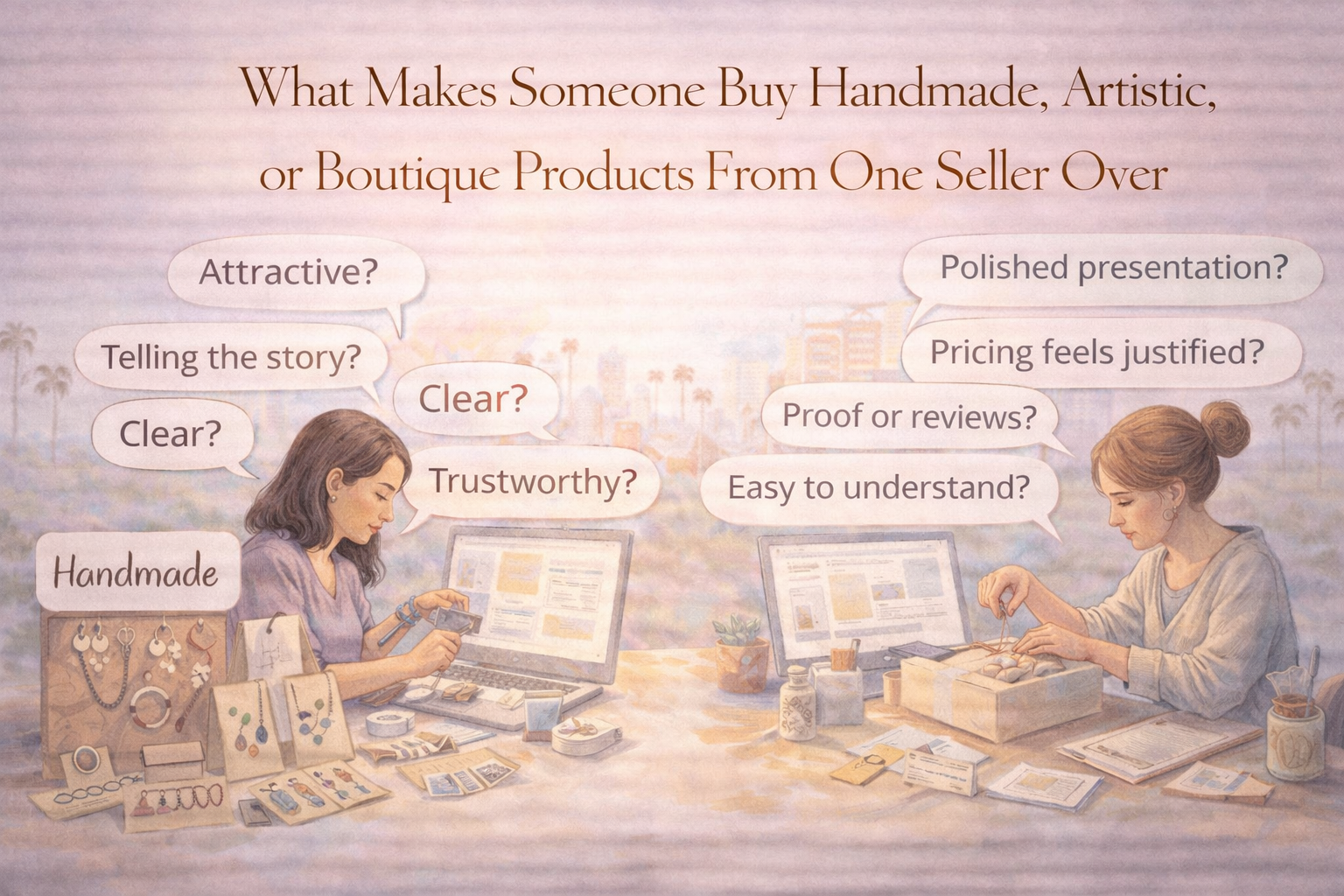
What Makes Someone Buy Handmade, Artistic, or Boutique Products From One Seller Over Another
Buyers of handmade and boutique products prioritize trust, clarity, and storytelling over mere aesthetics. While taste matters, factors like seller credibility, pricing justification, and social proof significantly influence purchasing decisions. Successful sellers present clear information and relatable narratives, making their offerings feel more valuable and trustworthy in competitive marketplaces.
-

The Difference Between a Brand Identity and a Brand People Actually Remember
The distinction between brand identity and memorable brands is crucial for new businesses. While a polished identity fosters visual recognition, a memorable brand resonates deeper, providing clarity, distinctiveness, and trust. Effective branding requires clear positioning and voice, enabling customers to not just recognize but also recall and describe the brand meaningfully.